Narrative Architecture: Indrapramit Das on Writing With and Within the City
Issue 16: Consumed | 2,476 words
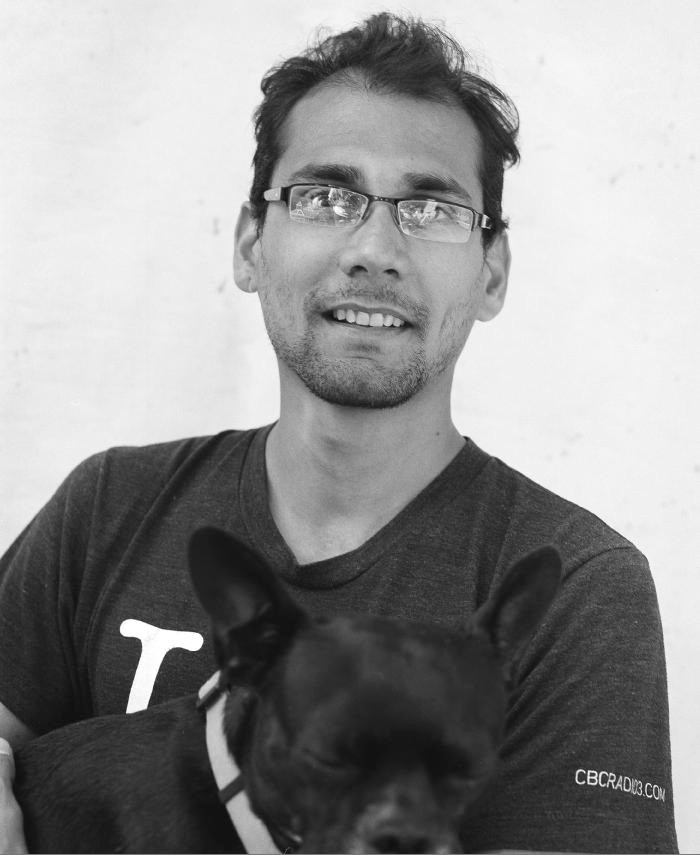
Indrapramit Das (also known as Indra Das) is a writer and editor from Kolkata, India. His short fictions have been featured in publications such as Clarkesworld, Asimov’s, Strange Horizons, The Indian Express, among others. His novel, The Devourers, was published by Penguin India (in South Asia) and Del Rey (in North America). The Last Dragoners of Bowbazar, Indra’s most recent novella, was published in the U.S. by Subterranean Press. Learn more at about Indra at http://indradas.com/.
Speculative City is a publication that examines the city in fiction. Almost all your works take place in the city and, if not, like in the story “The Worldless”, the city presents as a desired place; characters may want to either escape to cities or find themselves lost in them. What is your relationship to the city and when do you find it most effective as a narrative element?
Indapramit Das: First off, thank you for taking the time to converse, I appreciate it.
I grew up in a city (Calcutta) have always lived in cities wherever I’ve travelled as a student (Lancaster, Pennsylvania, U.S.; Vancouver, British Columbia, Canada). I’ve always found comfort in the way they gather humanity. The ideal of the city is communal unity, multiculturalism, opportunity, a place where life proliferates in ways that overcome and dazzle the solitary human being. Though that is never the entire reality, or the reality at all, because of the systemic ills of human civilization. But it is the ideal. I feel at home in cities. For a species so rooted in strife and violence, cities represent our ability to put aside the artificial borders of our nation states and segregations and bigotries and live together—as one heaving organism. Again, the reality is far more complex, but cities are microcosms of countries, of the world, and I believe that’s why they’re so valuable as architecture for narratives. Stories are, no matter how simple, expressions of our need to say something about all of humanity. Cities are convenient to stories because they gather all of humanity in one place. They are exhibitions of our ability and atrocity—our art, architecture, cultures, vehicles, cuisines, depredations, triumphs, our machineries of control and surveillance and authority and incarceration, I could go on. Cities tell stories by themselves, so of course writers would tell stories about cities. But then, the “countryside” is also filled with cities—for other species. Everything is one, which is the idea that our most malevolent stories, narratives, language, ideologies, want to deny and dismember.
While your stories highlight the city, not all the characters may be from a city, and some may even live nomadically. In the perspectives of these characters, city presents as a stopover, a controlled temporary in contrast to a more uncontrollable forest or outer land. When you bring this juxtaposition to stories, what do you wish to impart to readers?
Everything, ultimately, is a city on a world this crowded with life. I’m interested in immersion, in sharing perspective with my readers. I want them to feel the countryside if they’re used to cities, and vice versa. It’s less a juxtaposition and more a sense of trying to capture the diversity of our planet, how much there is to the world and how much we—again, as a species, sorry, my mind always goes to the big picture—define and transform the environment around us. Our constructive and destructive power—our cities, our civilizations, come at a cost to other life, to the natural environment of the planet. I like to describe what is within and outside the populated nexuses of our civilization because none of it is to be taken for granted. We have the terrible power to make it all go away, to make these gradations from one environment to another vanish forever into one homogenized wasteland of capital. Everything I write is intended to be a part of our cultural, communal memory as a species of artists. We must remember everything before we change it forever.

Our theme for Issue 16 is consumed. We use the word in its adjective form to convey a series of meanings, from the literal to the figurative. The first work of yours I read was Devourers, a novel that hits on concepts of devotion, obsession, and actual eating. It’s a work that completely embodies the multiplicity of consumed that we wish to portray with this issue. For this question, though, we’d like to focus more on eating.
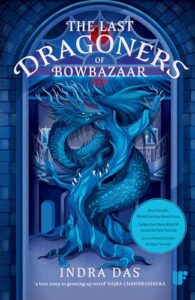
In Devourers, as well as some of your short stories, like “The Widow and the Xir”, the act of eating plays a large role in how characters relate to one other and move through the world. In your most recent novella, The Last Dragoners of Bowbazar, food also serves as a tool characters use to cope with their unsettled lives. Why the focus on food as this motivating, sensory element?
Eating and other bodily functions are an essential part of life and culture, so I try and put them in my fiction whenever possible. We are animal beings pretending that we’re not because we have somewhat larger brains than many other animals and can change the physical reality around us to a much greater extent. There is a god-like power to that. Food grounds us—it is a bodily need that is woven into social and cultural functions. We cannot live without it. It is a key ingredient in forming our cultures; like the tribes in “The Widow and the Xir” or the shapeshifting hunter tribes in The Devourers, nomadic peoples gather food in different ways than sedentary people. Immigrants, like the family in The Last Dragoners of Bowbazar, have different cuisines that speak to their crossing ethno-social boundaries.
How well a country is able to feed its people speaks to the health of its cultures. How a country treats people for eating what they do does the same—as we can see in India, where eating meat or “non-vegetarian” food can lead to prison, social sanction, or an informal death sentence. The way we raise and grow our food speaks to the degree to which a culture is in balance with its environment—see the global capitalist industrialization of meat production and agriculture and their massive environmental costs, their undercutting of human (and animal) rights. The way people eat, and what they eat, can tell a lot about their environment and contexts. Stories, again. Food naturally tells stories, like cities. So it’s only natural to weave it into stories. Food tells us a lot about the beings that eat it, and their relationship to their environment.
Moving away from the material of a city and food, now I’d like to ask about a hot topic: AI. “Ingestion” is a population metaphor for AI, and in “Holograms and Gaslight”, generative AI devours the visual field for inhabitants of the story, appearing on streets as violent entities. Why do you describe AI like this? How does this imagery draw attention to the ways AI is consuming and metabolizing the world?
I agree the story is about generative AI, about how technofascism disenchants the world and captures and beauty and truth. Consumes it too, of course, since generative AIs are algorithmic models that scrape all the information on the internet—massive amounts of information, metadata about our personal lives online, art, prose, photography, video, posts—and regurgitate it into synthetic information and/or art at the behest and control of the fascist corporations that develop and own them. This allows those corporations to control truth itself and destroy all trust in reality and healthy fantasy. Now, if we see anything online—news, art, photos, whatever—we question whether it’s real, whether it’s just a synthetic facsimile of human creations generated by unthinking server farms. Even the appreciation of something beautiful is tainted by the possibility that it’s not real. You cannot trust news (which was already the case because of systemic bias, among other things), information, beauty. In the story, something beautiful and inexplicable and impossible happens, and the technofascist powers of the world capture that beauty and impossibility and re-narrativize it into stochastic and fascistic violence. Everything beautiful is swallowed by generative AI and turned into a sharp, ugly tool for fascism.
Just look at how popular synthetic generated AI art is among fascist parties the world over—they love pumping out propaganda imagery of invading hordes of immigrants, of their leaders looking like malformed gods with bulging, swollen muscles that become parodies of masculinity. It’s hideous. Or, for online losers, look how popular generative AI is as a mode of creating “girlfriends” or sexual content from the likenesses of real people, from generations of erotic art created by human beings. That too is a violation. Look at how genAI chatbots encourage self-harm in people, not because they are wicked spirits, but because they’re tools made to say “yes” to everything, including killing yourself or making bad life choices or committing violence towards others or affirming lies or triggering latent mental health issues or… I could go on and on.
Generative AI is an infoweapon that destroys faith, trust, and truth. It is unsustainable cultural and technological poison. It cannot last, and it’ll damage so much when it collapses, having been used by tech corporations to colonise practically every single industry on Earth and undercut the power of human labour. Generative AI is violent—it’s a weapon being used to attempt a truly massive transfer of the means of production across various industries to the corporate class, to disempower human labour, to destroy education and critical thinking by controlling the flow of information and expanding the scope of disinformation. The cost is so catastrophically high, though, that it can’t last. The environmental and human rights costs as well, but those are things the tech companies and governments allying with them don’t give a shit about. The financial unsustainability of the tech is something they care about—and it’ll eventually pop this bubble and cause a shockwave through the world economy. Of course, it’s people who aren’t the tech elite and billionaires who’ll have to bear the costs of the bubble popping.
Thank you for that response. For some of us writers and editors, the brutalizing impacts of genAI come in a question we’ve begun to ask ourselves: Can our words be trusted as our own? (Full disclosure: no genAI was used in this interview!)
Now let’s talk more on the act of writing. What is your writing process and is there any particular point at which you find yourself most engaged or consumed?
I don’t have any one process. Either I’m writing or I’m not. Even when I’m not, everything I do goes into writing—all my experiences, all my thinking, everything I watch or listen to or read. When “I’m writing”, there are many gradations of frustration, tedium, research, hard work, wonder, and intense euphoria. When things start flowing and you see your characters behaving like real people, see your world feeling like an actual place on the page, there’s no happiness like it. When you see nothing but a blank page, there’s no frustration like it.
Are there any themes, narrative arcs, etc. that used to consume you that you’ve now moved away from?
I can’t say I’m keeping track. Themes and narrative arcs are fluid, ever-shifting. I don’t think they can be that easily itemized. But if they can, I’ll leave that to my readers and critics.
Going back a little to AI, how do you see your work shifting in this changing landscape for writing, art, and intellectual property?
I refuse to change my own work. I will write as I always have. If anything, artists should get even weirder, should create even more art that challenges categorization and homogenization. I’ll continue to boycott genAI until it is a memory of a catastrophe unleashed on the world by cartoonishly evil technofascist supervillains.
As the world gets eaten up by new technology, despotism, and new disasters—whether that be from war or cataclysmic storm—would you recommend any books or stories to help us cope?
Hmm, off the top of my head—Han Kang’s Human Acts (trans. Deborah Smith), a fictionalized account of the Gwangju massacre, is a remarkable gestalt of the human struggle to maintain dignity against states hellbent on breaking dissent and revolutionary thought. I found it deeply affecting. Samit Basu’s Chosen Spirits (known as The City Inside for its U.S. edition) is a superb look at how a future India might cope (or collapse, or both simultaneously) with the horrors being inflicted on it by capitalism and fascism. I think now is a great time for people to read Joe Sacco’s Palestine and Footnotes in Gaza, as Israel’s genocide in Gaza (now expanded into Lebanon and Syria) continues in its third year to be a focal point for the escalating atrocities of our governments while being buried by the media. The Once and Future Riot, Sacco’s latest book on the 2013 Muzaffarnagar riots in India, incidentally, just got denied publication by Penguin India for reasons obvious. While one’s at it, one might read Palestinian author Adania Shibli’s Minor Detail (trans. Elisabeth Jaquette), a haunting look at life under occupation—a ghost story for an entire country. There’s also Malik Sajad’s wonderful Munnu: A Boy From Kashmir, which looks at life under occupation closer to home. Vajra Chandrasekera’s The Saint of Bright Doors and Rakesfall are dazzling novels that are all about fighting and outliving deep-seated, cultural evil so malignant it poisons reality itself; they’re a dreamlike duology of multidimensional revolution that will hopefully both inspire and terrify you. Also, a shout-out to Shreya Ila Anasuya’s The Poison Palace, a beautiful upcoming historical novel about a courtesan in South Asia travelling towards Alexander the Great’s conquering army to try and assassinate him.
To finish off, always have to ask—are you working on any new stories that we can expect soon?
I have a new story called “Passengers”, about high school students on a night train travelling through ’90s Bengal going on a metaphysical journey when they encounter unexpected violence. It’s in Jonathan Strahan’s upcoming anthology The Book of the Dead (Harper Voyager), out October this year. However, I don’t know that it’ll be available in South Asia—perhaps as an ebook? As for things I’m working on, I prefer not to talk about those until they’re a certain thing. I do, of course, have a book out in India currently, a slim little novel about a “boy from nowhere” coming of age in ’90s/’00s Calcutta within a family who may be refugees from another reality, living in a house that may be a dragons’ nest. It’s called The Last Dragoners of Bowbazaar, out from Westland Books, and I’d love if it more Indian readers picked it up.